


I. Introduction
A. Introduction to PTFE Integral Molding Mixer Settler
In today's rapidly evolving industrial landscape, the demand for robust and efficient equipment to support complex processes is greater than ever. It is one such innovation that has been making significant contributions to various industries, from chemical processing to environmental protection. In this comprehensive product introduction, we will explore the fascinating world of it, highlighting its exceptional features, applications, design, operation, and much more.
B. Significance in Industries
It holds immense significance in industries where liquid-liquid separation and phase separation are pivotal processes. Its unique design and use of PTFE (Polytetrafluoroethylene) material bring a new level of performance, reliability, and adaptability. The equipment excels in maintaining the purity of chemicals, facilitating efficient phase separation, and contributing to sustainable environmental practices.
C. Outline of the Product Introduction
This product introduction will follow a structured outline to provide a thorough understanding of the PTFE Integral Molding Mixer Settler. It will begin with a definition and explanation of the equipment's fundamental principles, followed by an in-depth exploration of its key features and advantages. Real-world applications in various industries will be discussed, showcasing the versatility of the equipment. The design and structure, operation and control, customization options, maintenance guidelines, and safety and environmental considerations will all be covered comprehensively. We will conclude by summarizing the key takeaways and inviting interested parties to connect with us for more information and support.

II. Product Overview
A. Defining PTFE Integral Molding Mixer Settler
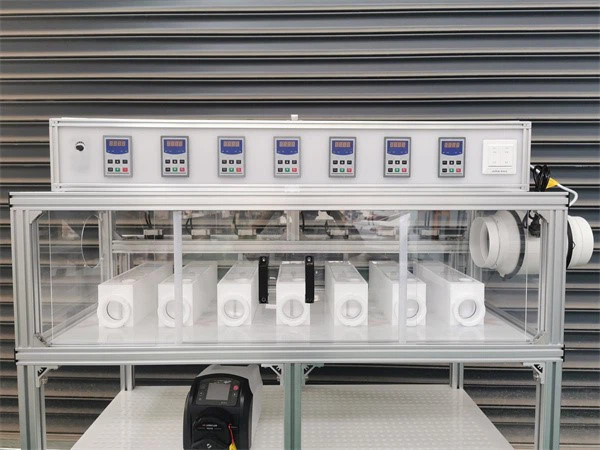
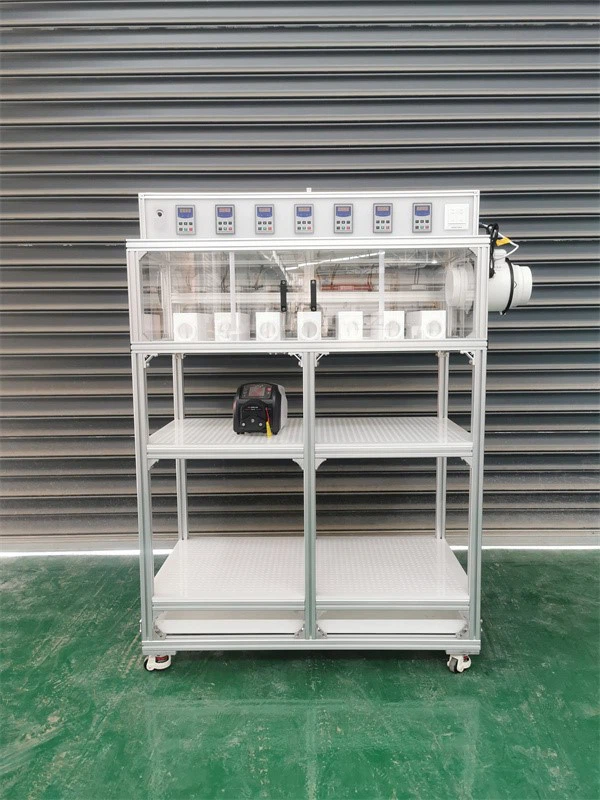
commonly referred to as the "PTFE Mixer Settler," represents a technological breakthrough in liquid-liquid separation equipment. This cutting-edge solution combines mechanical mixing and gravitational settling within a single integrated structure. The primary objective of the PTFE Mixer Settler is to efficiently and precisely separate different components within liquid mixtures. It is utilized across a spectrum of industries for applications involving chemical processing, bioengineering, and environmental protection.
B. Working Principles and Purpose
At the core of the PTFE Mixer Settler's functionality are its fundamental working principles. This equipment serves a critical purpose in industrial processes, and its operation is rooted in the following principles:
Mechanical Mixing: The PTFE Mixer Settler initiates the separation process by mechanically mixing the liquid mixture. This is achieved using a well-designed mixing mechanism, often comprising specialized blades or impellers. The mechanical mixing serves to ensure an even distribution of components throughout the liquid.
Gravitational Settling: Following the mechanical mixing, the liquid mixture is transferred to the settling chamber. This is where gravitational settling comes into play. The settling chamber is thoughtfully designed to promote the separation of components based on their density differences. Heavier components gravitate towards the bottom of the chamber, while lighter components remain in the upper layers.
Extraction: Once the gravitational settling process is complete, the separated components can be efficiently extracted from the settling chamber. The result is a purified solution, with unwanted components and impurities left behind. This precision is crucial in industries where product purity and process efficiency are non-negotiable.
The primary purpose of it is to streamline and enhance the separation process. It ensures that the desired component is effectively extracted from the liquid mixture, leaving behind impurities and unwanted substances. This is particularly significant in industries where precise separation is essential for maintaining product quality and process integrity.
III. Key Features and Advantages
A. Advantages of PTFE Material
The outstanding performance of it is largely attributed to its choice of materials, particularly the utilization of PTFE. PTFE offers a multitude of advantages that contribute to the equipment's exceptional performance:
Corrosion Resistance: PTFE is renowned for its exceptional resistance to corrosion. It can withstand exposure to a wide range of aggressive chemicals without suffering degradation, making it ideal for applications in corrosive environments.
High-Temperature Tolerance: PTFE exhibits excellent resistance to high temperatures. This feature ensures that the equipment remains stable and functional even in applications involving elevated temperatures.
Chemical Inertness: PTFE is chemically inert, meaning it does not react with most chemicals. This property is fundamental in maintaining the purity of substances being processed and ensures that the material integrity is preserved.
High Mechanical Strength: PTFE offers remarkable mechanical strength, allowing the equipment to withstand the stresses and forces generated during the mixing and settling processes. This results in a long-lasting and durable solution.
Low Maintenance Requirements: Due to its resistance to corrosion and wear, its require minimal maintenance, leading to cost savings and extended equipment lifespan.
B. Innovative Design Advantages
The design of it is a testament to ingenuity and innovation. The unique aspects of its design contribute significantly to its superior performance:
Integral Molding: The equipment is constructed using integral molding techniques, where the entire structure is formed in a single piece. This design eliminates the need for joints, welds, or seams, which can be points of weakness and potential leakage in traditional equipment.
Leak-Proof Structure: The integral molding design ensures a leak-proof structure, enhancing safety and preventing contamination of the separated components.
Sturdiness and Stability: The integral molding provides the equipment with sturdiness and stability, even in demanding industrial settings. It can withstand mechanical stresses and environmental factors.
Modular Components: Some PTFE Integral Molding Mixer Settlers are designed with modular components, allowing for easy replacement and upgrading of parts, further enhancing their adaptability and flexibility.
C. Customization and Adaptability
One of the standout features of it is its adaptability to meet the specific needs of different applications. The equipment's customization options offer tailored solutions to address unique requirements:
Size and Capacity: PTFE Mixer Settlers come in various sizes and capacities to match the throughput demands of different industrial processes. Whether the operation is relatively small or high-capacity, there is a suitable solution available.
Material Selection: While PTFE is the standard material of choice due to its outstanding properties, there are customization options for alternative materials when applications require specific material compatibility.
Control Systems Customization: The level of automation can be tailored based on the complexity of the process and the operator's preference. Control interfaces and preset recipes can be customized to simplify operation.
Accessories and Add-Ons: The equipment can be enhanced with accessories and add-ons, such as advanced monitoring systems, safety features, and data logging capabilities, depending on the specific application's requirements.
Customization ensures that the PTFE Integral Molding Mixer Settler aligns seamlessly with the unique needs of industrial processes. Manufacturers work closely with clients to determine the optimal configuration to achieve desired results.
IV. Applications
A. Chemical Processing Industry Applications
It finds extensive use in the chemical processing industry, where separation and purification are fundamental processes. Its adaptability and corrosion-resistant properties make it a valuable asset in various applications:
Solvent Extraction: Solvent extraction is a common method in the chemical industry for separating valuable components from solutions. The PTFE Mixer Settler efficiently separates the solvent from the solute, ensuring the purity of the end product.
Chemical Purification: In chemical processes, the removal of impurities and contaminants is often necessary. The PTFE Mixer Settler excels at ensuring high-purity end products by effectively separating impurities.
Aqueous Solutions: For applications involving aqueous solutions, the PTFE Mixer Settler efficiently separates water from other components. This is essential in processes where water content needs to be controlled.
Reactive Processes: In some chemical reactions, it's crucial to separate the reactants from the products. The PTFE Mixer Settler plays a critical role in this separation while preserving the purity of the final compounds.
B. Bioengineering and Pharmaceutical Industry Applications
In the field of bioengineering and pharmaceuticals, precise separation and purification are paramount. The PTFE Integral Molding Mixer Settler contributes to these industries in various ways:
Bioprocessing: In bioprocessing applications, the equipment is used for the separation of biologically derived products, such as proteins, nucleic acids, and pharmaceutical compounds. Its chemical inertness and leak-proof design are crucial for maintaining product integrity.
Cell Culture Separation: In cell culture processes, the PTFE Mixer Settler is utilized for the separation of cells from culture media, enabling the recovery of valuable cell products.
Pharmaceutical Purification: The equipment can be employed for the purification of active pharmaceutical ingredients (APIs) and other compounds, ensuring that pharmaceutical products meet stringent purity standards.
C. Environmental Protection and Waste Management Applications
Environmental protection and responsible waste management are central concerns worldwide. It plays a pivotal role in various environmental applications:
Wastewater Treatment: In wastewater treatment plants, the equipment assists in the separation of pollutants from water, ensuring that treated water is safe for discharge into the environment.
Oil-Water Separation: Industries such as oil refineries and petrochemical plants rely on the equipment for efficient oil-water separation processes.
Remediation of Contaminated Soil and Water: In environmental remediation efforts, the PTFE Mixer Settler can be employed to separate contaminants from soil and water, aiding in the restoration of contaminated sites.
Recycling Efforts: The equipment plays a crucial role in recycling processes, helping to separate valuable materials from mixed waste streams.
D. Other Industries and Potential Applications
The versatility of it extends beyond the chemical, bioengineering, and environmental industries. It has the potential to contribute to other sectors as well:
Food and Beverage Industry: The equipment can be employed for various separation processes in the food and beverage industry, such as the removal of fats and oils from liquid products.
Mining Industry: In mining, the equipment is used for mineral processing and the extraction of valuable minerals from ore.
Metallurgical Industry: In the metallurgical industry, the equipment can support various separation processes and metal purification, particularly when corrosive substances are involved.
V. Design and Structure
A. Mixer Settler Components
That is a well-structured piece of equipment that consists of several key components, each of which plays a crucial role in its overall operation. Let's take a closer look at these components:
1. Mixing Mechanism: The heart of the PTFE Mixer Settler is the mixing mechanism. This component is responsible for ensuring the thorough and even distribution of components within the liquid mixture. Common mixing mechanisms include impellers or blades, which are strategically positioned to create turbulence in the mixture.
2. Settling Chamber: After the mechanical mixing, the liquid mixture is directed into the settling chamber. The settling chamber is designed to facilitate the gravitational settling of components based on their density differences. The chamber is typically cylindrical, and its dimensions can vary based on the specific application.
3. Outlets and Ports: The PTFE Mixer Settler is equipped with strategically positioned outlets and ports for the extraction of separated components. These outlets are designed to ensure the efficient removal of the desired component while leaving impurities and other components behind.
4. Support Structure: The equipment is mounted on a sturdy support structure, often made from stainless steel or another corrosion-resistant material. This structure ensures stability during operation and facilitates ease of maintenance.
B. Layout and Configuration
The layout of a PTFE Integral Molding Mixer Settler is carefully designed to optimize the separation process. The key aspects of the layout and configuration include:
1. Mixing Chamber: The mixing chamber is typically positioned at the top of the equipment. This is where the mechanical mixing takes place. The mixing chamber is fitted with the mixing mechanism, which is driven by a motor for efficient blending of components.
2. Settling Section: Beneath the mixing chamber lies the settling section, often a cylindrical chamber. This section allows for gravitational settling, with heavier components migrating towards the bottom of the chamber and lighter components remaining in the upper layers.
3. Extraction Ports: The extraction ports are strategically located to facilitate the removal of the separated components. Careful placement ensures efficient extraction while preventing the re-mixing of separated materials.
4. Integral Molding: The integral molding technique creates a seamless structure without joints, welds, or seams. This design eliminates potential points of weakness and leakage, contributing to the equipment's leak-proof nature.
5. Modular Design (Optional): Some models of the PTFE Mixer Settler feature a modular design, allowing for the easy replacement and upgrading of individual components. This modularity enhances adaptability and flexibility.

VI. Operation and Control
The successful operation of it is contingent on effective control mechanisms. The equipment can be operated manually or through various levels of automation, depending on the complexity of the process and the operator's preference:
A. Manual Control
Manual control is often employed when processes require a high degree of flexibility and adaptability. Operators have direct control over the equipment's operation, adjusting mixing speed and extraction processes as needed.
B. Semi-Automated Control
Semi-automated control systems offer a balance between manual control and full automation. These systems may include preset recipes for common processes, making it easier for operators to achieve desired results. Semi-automated control can enhance precision and reduce the likelihood of human error.
C. Fully Automated Control
Fully automated control systems provide the highest level of precision and repeatability. They often include advanced features, such as sensors for monitoring density and phase separation, as well as feedback mechanisms to adjust mixing speed in real-time. Fully automated control is ideal for processes requiring consistent and accurate separation.
D. Safety Interlocks
Safety interlocks are an essential feature of control systems for the PTFE Mixer Settler. They ensure that the equipment operates within safe parameters and can include emergency shut-off mechanisms in case of anomalies. Safety is a top priority in industrial operations, and these interlocks provide an additional layer of protection.
E. Monitoring and Data Logging
Many control systems are equipped with monitoring and data logging capabilities. This allows operators to track the progress of the separation process and collect data for analysis and quality control. Real-time data monitoring enhances the operator's ability to make informed decisions during the separation process.
The choice of control system depends on the specific requirements of the application and the level of automation and precision needed. In some cases, a combination of manual and automated control may be the most effective approach.
VII. Customization Options
The PTFE Integral Molding Mixer Settler's flexibility and adaptability make it a valuable asset in various industries. Customization options allow users to tailor the equipment to their specific needs. Here are some key areas where customization is possible:
A. Size and Capacity
The size and capacity of the PTFE Integral Molding Mixer Settler can be customized to match the requirements of the application. This is particularly important when dealing with different volumes of liquid mixtures and varying flow rates. Whether your operation is relatively small or demands high-capacity processing, there's a suitable solution available.
Customization in terms of size and capacity ensures that the equipment can handle the specific throughput of your industrial process. It prevents bottlenecks and ensures optimal efficiency.
B. Material Selection
While PTFE is the standard material of choice for the construction of the Mixer Settler due to its outstanding properties, customization in terms of material selection is possible. Different industrial applications may require specific material compatibility due to the nature of the substances being processed.
For example, if your application involves highly aggressive chemicals or materials with unique characteristics, the equipment can be constructed from alternative materials to ensure compatibility and longevity. Material options are typically discussed and selected during the customization process.
C. Control Systems Customization
Control systems can be customized to match the operator's preferences and the specific requirements of the industrial process. This level of customization includes:
1. Automation Level: The degree of automation can be adjusted based on the complexity of the process and the operator's comfort with automation. You can choose from fully manual control to semi-automated and fully automated control systems.
2. Control Interface: The control interface can be customized to provide the operator with a user-friendly and intuitive experience. This includes touchscreen displays and user-friendly software.
3. Preset Recipes: For processes that are conducted regularly, preset recipes can be created and stored in the control system. This simplifies the operation and reduces the likelihood of errors.
D. Accessories and Add-Ons
Various accessories and add-ons can be incorporated into it based on the specific requirements of the application. Some common accessories and add-ons include:
1. Monitoring Systems: Advanced monitoring systems can be integrated into the equipment. These systems provide real-time data on parameters such as temperature, pressure, and phase separation.
2. Safety Features: Safety is a top priority in industrial operations. Safety features such as emergency shut-off systems, safety interlocks, and alarms can be added to the equipment to enhance workplace safety.
3. Data Logging and Reporting: Data logging capabilities can be included for compliance and quality control purposes. This allows operators to keep records of the separation process and generate reports for analysis.
Customization ensures that aligns perfectly with the unique needs of your industrial process. Manufacturers work closely with clients to determine the optimal configuration to achieve the desired results.
VIII. Maintenance and Servicing
Ensuring the proper maintenance of your PTFE Integral Molding Mixer Settler is essential for its longevity and continued efficient operation. Regular maintenance and servicing not only extend the lifespan of the equipment but also help in preventing unexpected downtime and maintaining the quality of separation. Here are some key maintenance considerations:
A. Routine Maintenance
Routine maintenance tasks should be performed at regular intervals to keep the equipment in optimal condition. These tasks include:
1. Cleaning: Regularly clean the mixer settler to remove any residue or build-up that may affect its performance. This includes cleaning the mixing mechanism and the settling chamber.
2. Lubrication: Ensure that all moving parts, such as bearings, are adequately lubricated to reduce friction and wear.
3. Inspection: Regularly inspect the equipment for signs of wear and tear, corrosion, or damage. Any issues should be addressed promptly to prevent further damage.
B. Periodic Checks
In addition to routine maintenance, periodic checks are essential to assess the overall condition of the equipment and identify any potential issues. These checks may include:
1. Mechanical Checks: Assess the condition of the mixing mechanism, checking for loose or damaged components that may affect its performance.
2. Material Integrity: Inspect the PTFE material for any signs of degradation or wear. PTFE is known for its resistance to corrosion, but it's still important to monitor its condition.
3. Electrical and Control Systems: Ensure that electrical components, such as motors and control systems, are functioning correctly. This includes verifying the operation of safety features.
C. Preventative Maintenance
Preventative maintenance involves more in-depth inspections and tasks to prevent potential issues from arising. It includes:
1. Replacing Wear Parts: Identify and replace any wear parts, such as seals, gaskets, or O-rings, to prevent leakage or performance issues.
2. Calibration: Calibrate sensors and instruments, particularly if the equipment is equipped with monitoring systems, to ensure accurate data collection and control.
3. Component Replacement: If modular components are part of the design, consider replacing specific components to improve performance or address wear and tear.
D. Spare Parts Availability
It's important to ensure the availability of spare parts to minimize downtime in case of unexpected failures. Manufacturers typically provide spare parts and components that are easily replaceable. It's advisable to keep a stock of critical spare parts on hand to address issues promptly.
E. Service Contracts
Some manufacturers offer service contracts that include routine maintenance, inspections, and servicing by trained technicians. Service contracts can be a convenient option for organizations looking to outsource maintenance tasks and ensure the continued optimal performance of their equipment.
IX. Safety and Environmental Considerations
A. Safety Precautions
Safety is paramount when working with industrial equipment like it. To ensure the safety of personnel and the integrity of the separation process, it's essential to follow safety precautions:
1. Training: Proper training should be provided to operators and maintenance personnel. They should be familiar with the equipment's operation and safety procedures.
2. Emergency Procedures: Clear emergency procedures should be established, including shut-off protocols in case of equipment malfunction or safety concerns.
3. Protective Gear: Personnel should be equipped with appropriate protective gear, including safety goggles, gloves, and protective clothing, when handling chemicals or working around the equipment.
4. Safety Interlocks: Ensure that safety interlocks are operational and that they can quickly shut down the equipment in case of emergencies.
B. Environmental Responsibility
In today's world, environmental responsibility is a growing concern for industries worldwide. It is designed with environmental responsibility in mind, making contributions through several avenues:
1. Efficient Separation
One of the primary ways the equipment contributes to environmental responsibility is through efficient separation. By effectively separating components, it reduces waste and minimizes the environmental impact. It ensures that valuable components are recovered, and impurities and waste materials are properly disposed of or treated. This not only preserves resources but also reduces the environmental footprint of industrial processes.
2. Material Choice
The choice of PTFE material in the construction of it also aligns with environmental responsibility. PTFE's resistance to corrosion and wear ensures the equipment's long lifespan, reducing the environmental impact over its lifecycle. Long-lasting equipment results in fewer replacements and less material waste.
3. Compliance with Regulations
The equipment is designed to comply with environmental regulations and standards. This includes ensuring that any effluents or byproducts of the separation process meet environmental guidelines. Compliance with these regulations is crucial in minimizing the environmental impact and ensuring responsible industrial practices.
4. Recycling and Waste Management
In certain applications, It plays a central role in recycling and waste management efforts. It aids in the separation of recyclable materials from mixed waste streams, contributing to environmental sustainability and the circular economy.
Hot Tags: ptfe integral molding mixer settler, China ptfe integral molding mixer settler manufacturers, factory, Stainless Steel Mixer Settler, Mixer Settler Equipment, Mixer-Settler, Mixer Settler Cascade, PMMA Micro Mixer Settler, Laboratory Mixer Settler


